Japanese Body Therapies
Shiatsu & Sotaiho
mindful, balancing, restorative
Japanese Body Therapies
Gentle manual methods to support health and address symptoms
Japanese bodywork and massage are based on the understanding that physical health and inner balance are inseparably connected.
Through mindful touch, focused pressure, or guided movement, the interplay between muscle tone, breathing, and posture is regulated — allowing the body to return to its natural state of balance.
In my practice, I work with two well-established forms of Japanese body therapy:
Shiatsu – a form of mindful manual bodywork – andSotaiho, a movement-based approach aimed at restoring functional balance.
Both methods complement one another: while Shiatsu uses gentle yet focused manual techniques to improve muscular coordination, circulation, and body awareness, Sotaiho works with active, comfortable movements to release postural tension and correct structural imbalances.
CONTENT
Shiatsu – Japanese Bodywork and Massage
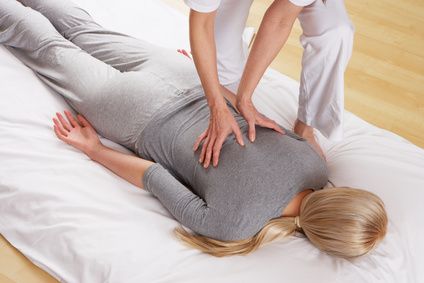
Shiatsu (literally “finger pressure”) is a manual therapy developed in Japan and rooted in the principles of traditional Japanese medicine.
It combines mindful, steady pressure along the meridians with gentle stretches and passive movements to encourage physical balance and release muscular tension.
Principle and Method
In Shiatsu, areas of tension and imbalance in the body are identified through touch and regulated by calm, measured pressure. The meridians are treated along their entire course, helping to restore harmonious connection between different parts of the body.
Treatments take place in a quiet atmosphere and in comfortable clothing. Rhythm, pressure and intensity are carefully adjusted to suit your constitution and current condition.
At the start, I use visual assessment to gain an impression of your body’s main tension lines and postural axes. This is followed by Hara diagnosis – a gentle palpation of the abdominal wall through the clothing, providing insight into the functional state of the meridians. Based on these findings, I design the course of treatment: a calm, continuous sequence of manual techniques that engage the whole body. Each area is first mobilised and gently stretched; tensions are then addressed through precise work with acupuncture points, muscles and connective tissue, before smoothly transitioning to the next region.
Effects
During a Shiatsu session, a state of deep physical relaxation often develops. Breathing becomes calmer, the mind settles, and the body’s natural self-regulation is supported. Many patients experience improved clarity, emotional balance and a general sense of vitality.
After treatment, restrictions in movement may ease, muscular tension may soften and pain sensations may diminish. With regular sessions, many people notice improved resilience and recovery capacity — signs of growing systemic stability.
Applications
Shiatsu can be applied both for preventive health support and to assist in managing functional complaints such as:
-
Tension in the neck, shoulders or back
-
Stress-related discomfort and sleep disturbances
-
Fatigue, restlessness or headaches
-
Digestive or circulatory regulation
Shiatsu can also complement other therapeutic approaches, such as acupuncture. When appropriate, I may provide you with simple Sotaiho exercises to help you extend and deepen the effects of treatment at home.
Sotaiho – Movement Therapy for Postural and Functional Regulation
Sotaiho (literally “method of body alignment”) is a movement-based therapeutic system developed by the Japanese physician Dr Keizo Hashimoto.
Its central principle can be summarised as: “Pleasant movement guides the body back to balance.” In many cases, this approach can ease discomfort in a simple and surprisingly effective way.
Understanding the body
The body moves as a functional whole. When one area becomes restricted – for example, through muscular tension – other regions must compensate, much like an uneven foundation affects the stability of a building.
From this, Sotaiho formulates the law of reciprocity: An imbalance in one region can be corrected through coordinated movement and breathing, allowing the entire body to reorganise itself.
Sotaiho is gentle and non-painful. All movements are guided by the person’s natural range of motion and individual body awareness.
Treatment process
Each session begins with an assessment of posture and structural alignment. Differences in joint position, mobility, muscle tone and fascial tension are observed and form the basis for treatment planning and evaluation of progress.
After exploring a specific movement together, we proceed collaboratively: as you exhale, you perform a comfortable movement in the easier direction, while I provide a finely tuned counter-resistance. I then guide the motion to a defined point and invite you to release the effort at a specific moment. After a few repetitions, we reassess the movement to observe changes, and continue with further techniques as needed.
Effects and goals
The aim of Sotaiho is to restore functional balance — improving both posture and coordination of movement. Many people notice greater ease of movement, lighter breathing and a more upright posture following treatment.
Based on each session, I may suggest a short sequence of simple exercises that you can continue at home. These follow the same Sotaiho principles and help you maintain and deepen the effects of the treatment independently.
Applications
Sotaiho can be helpful for:
-
Chronic muscular or joint discomfort
-
Tension in the back, shoulders or neck
-
Postural imbalances and movement restrictions
-
Functional complaints such as digestive or breathing difficulties
Who Can Benefit
Both Shiatsu and Sotaiho are gentle, adaptable and well tolerated — also suitable for older adults or those with a sensitive constitution.
If you have questions about these methods or would like to discuss whether they may be suitable for you, please feel free to get in touch — preferably by phone or message.
You are also welcome to arrange an initial appointment to discuss which form of treatment may be most appropriate for your situation.